 | ||||||
 | 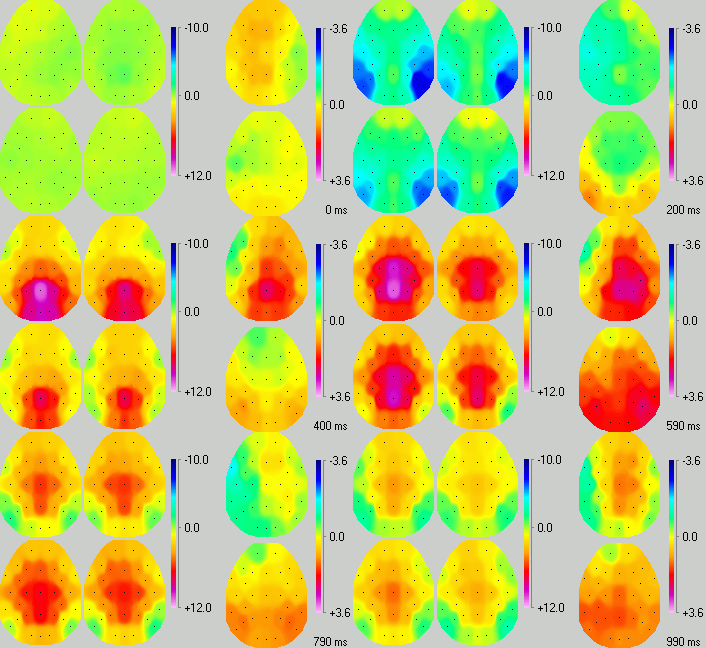 | |||||
Surface potential topographies of right-handed healthy adults (n=16) and depressed patients (n=30) for negative and neutral stimuli (ERPs averaged across hemifield of presentation), and the difference in topography (i.e., negative minus neutral). At the peak of P3 amplitude (460 ms), healthy adults show greater P3 for negative than neutral stimuli, particularly over the right parietal region. Depressed patients do not show this emotion-specific increase of late P3 amplitude or asymmetry. However, patients show larger early P3 (310 ms) to negative than neutral stimuli with a maximum over the right parietal region.
| ||||||
| View animations frame-by-frame with Moyager freeware movie player. |  | |||||
| Use the right mouse-click pop-up menu (Netscape, Explorer) while the mouse cursor is over the animated image to save the animation. | ||||||